Friday, April 26, 2013

What's in a Net?


In Senegal, I’m an anomaly.  For a country that lists malaria as one of its greatest threats, I’ve been largely unaffected.  My host family, my friends, my co-workers – I’m thankful to say that none of them succumbed to malaria during my time here, but even more strangely, none of them ever even contracted malaria.  My local health post, situated in a bustling urban neighborhood, documented only two treated cases of the disease during my first rainy season.  It seems that I live in a pocket where prevention - through both treated mosquito nets and insecticide sprays - has truly taken hold.

But outside of my immediate surroundings, malaria is brutal. Worldwide, experts estimate that the disease kills a little less than a million people each year.  230 million contract malaria every year, and even if they don’t succumb to its clutches, the experience is far from pleasant.  Among Peace Corps volunteers, we consider the possibility of malaria with questions such as: can you do anything more than lie on the floor and groan?  Do you feel like you’re dying?  Is this the worst pain you’ve ever experienced in your life? This disease keeps kids out of school for weeks, costs struggling countries billions of dollars, and makes the flu a walk in the park.

One area with a surprisingly high incidence of malaria is the district immediately next to mine, Pout.  Another Peace Corps volunteer, my friend Andrew, lives in Pout and was approached by his local health post to collaborate on a malaria education project. Pout is labeled a red zone – the highest and most dangerous classification – by the Senegalese Ministry of Health due to its high malaria infection rates.  The health post wanted to organize a tour of local middle and high schools, where we would present short presentations to reinforce knowledge about preventing malaria.  Middle and high school students, they explained, are ideal targets for behavior change activities, having the capacity to absorb information, practice it, and pass on the information to their families and neighbors.

And so that’s what we did.  Seldom do Peace Corps projects unfold so easily, but with the enthusiasm of the Pout Health Post in organizing logistics, the enthusiasm of each school in welcoming us, the assistance of a USAID Small Projects Assistance grant, and that dependable Peace Corps volunteer knack for creating educational content, we pulled off a successful project over the course of a week.  

A local ICP (head nurse) reinforces our points for students in Wolof.  I stand next to him, being extremely supportive.


At each school, we teamed up with local nurses, health volunteers, and teachers to lead a presentation about using bed nets to combat malaria.  We chose to focus on bed nets because not only are they the most cost-effective measure for reducing transmission, but a recent campaign by PNLP (National Program to Fight Malaria) had just distributed free impregnated mosquito nets to every household in the district.  In the end, we spoke to over 1900 students, teachers, and health workers at nine different schools.  Success!

But because we had a lot of time driving in cars between schools, I started thinking about behavior change.  Behavior change is a Peace Corps catch phrase and the end goal of most education projects: the idea of giving people knowledge that they translate into action.  It’s more than simply explaining the benefits of washing your hands, keeping business records, or rotating field crops; successful behavior change makes those actions the reflexive norm. For malaria, everyone (NGOs, international organizations, Senegal, Peace Corps, and every actor in between) wants to make sleeping under a mosquito net that undisputed, reflexive norm, with the obvious benefit being a reduction in malaria.

In many of the schools we visited, the students demonstrated impeccable knowledge about malaria transmission and prevention.  Public-service announcements and propaganda about bed net usage permeate Senegal, through billboards, radio, television, and school lessons, so this was no surprise.  What caught my attention was an impromptu survey we took at the beginning of each program: only 52% of the students said they had a mosquito net in their room, despite the recent universal coverage campaign.  Their behavior didn't measure up.

More strikingly, only 22% of the 1900 students had slept under their mosquito net the previous night.  Millions of dollars have been poured into campaigns about using impregnated bed nets.  Senegalese celebrities have joined the cause, grand events are hosted, and free nets are distributed by health workers with the intention of covering every single bed.  And yet – only 22% of the students, undoubtedly one of the most educated groups, were using the nets.

Wait, seriously?  None of you slept under your bed nets last night?  Did I stutter with my question?

Behavior change is hard.  And I don’t completely blame the students for avoiding  their mosquito nets.  In many ways, malaria is a fact of life here, and many people are willing to take their chances with it.  Plus, nets are hot.  Nights in Senegal leave people sweating on mattresses, desperately waiting for the smallest twinges of a breeze to give them a few seconds of relief.  Who wants to compound that heat by wrapping themselves in a gauzy net every night?  Personally, I use my net religiously, but mostly because I’m terrified of cockroaches, mice, lizards, and rats the size of terriers, not because I know malaria might kill me.

Truthfully, our malaria tour reminded me of all the knowledge Americans push aside with regularity – smoking, drunk driving, using condoms.  Simply knowing something is dangerous isn’t really enough to move people to action, or moreover, prevention.  So what does guarantee compliance, 100% of the time?  What changes behaviors?

Obviously, I don’t have the answer.  During our program, we inadvertently employed a host of different approaches.  We tried to imbibe the students with a sense of responsibility and ownership, telling them that they were responsible for being agents and passing on the information to other people.  We outlined the costs of having malaria – financially, lost school time, health-wise – and cut them against the cost of prevention – using a free, impregnated net.  We tried to inspire them with attainable goals of eradicating malaria.  We tried to make them see their nets not only as a protection for themselves, but a weapon to actively kill mosquitos that could harm other people in their homes.  The Senegalese health workers even tried to shame students who admitted to not sleeping under nets, making them stand up and address the class.

Behavior change technique: throw some children under a net, pretend to attack them with a life-size homemade mosquito, and do some sassy finger wagging.  Success rate for this method TBD.


In the end, I think our program succeeded in giving students information beyond the catchphrases and slogans they’ve memorized from public health campaigns.  I think the students appreciated the novelty of discussing malaria with some crazy strangers and charismatic health workers, and a few of them were able to get free nets that day. 

I have no idea if 22% or 0% or 100% of our students slept under their mosquito nets the night after our visit.  Ultimately, I hope that whatever they did, they did it with a better understanding of whatever consequences they were choosing.  I hope they realize just what's in a net: the capacity to cut down malaria, to ensure school and work attendance, the chance to wipe out malaria-infected mosquitos, the chance to save lives.  A net has a pretty high net worth.  Hopefully, knowing what's in a net can start translating into who should be in a net -  and less needless malaria by this time next year.  

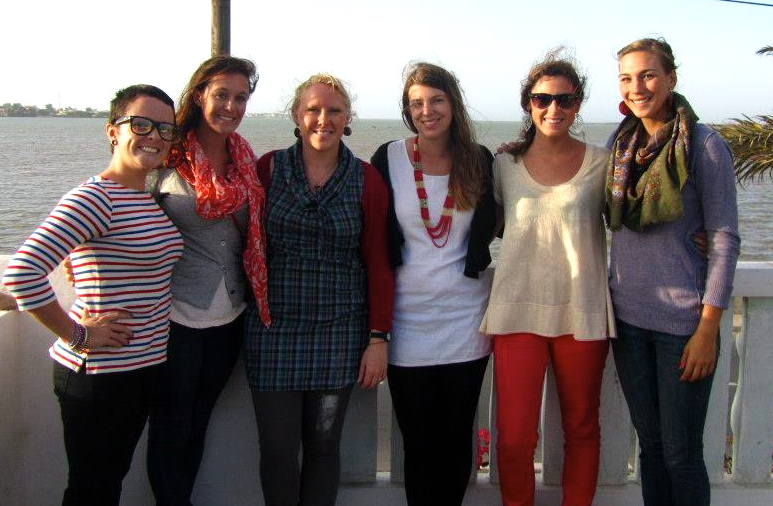
Part of our Pout Malaria Tournee team with a lot of random people who happened to be passing by when the photo was taken.  Teamwork!


You can read a case study about our project here: http://www.pcsenegal.org/case_studies/146-pout-malaria-tournee

Wednesday, February 6, 2013

Life Project: Discovering Senegalese Culture


Recently, I embarked on a new life project.  At any given moment, I am probably involved in 1-2 life projects.  Previous ones have included trying to learn how to do the splits, baking, understanding the anthropological history of the African continent, memorizing rap lyrics, and Oprah magazines.  I think it’s important to have hobbies.

Anyway, one of my current life projects is “DISCOVERING SENEGALESE CULTURE.”  I hit a point in my service when I realized I’d lost sight of one of my biggest reasons for joining the Peace Corps.  Little known fact, most Peace Corps volunteers are hardly martyrs, myself included.  I had all sorts of reasons for coming to Senegal.  For instance: I wanted to challenge myself.  I wanted work experience.  I wanted the chance to work on something important and interesting.  I wanted the time to figure out what I would find important and interesting.  And probably most of all, I wanted to fully live in a different place.

I know realize that ‘fully live’ means more than just adapting myself to Senegal; it includes living my life, here, and doing things that I’ve always done.  Music.  Theater.  Dancing.  Art.  Guacamole.  When I leave, I want to feel like I, Lisa the person, lived here, and that means finding ways to do things that I’ve always loved.  Some crazy stuff can be found here; other things need to be improvised.  But I know that eventually I’ll go home and find a job and probably work until I’m old and decrepit, but never again will I be in this place with its music, dancing, and art... so I better go and find it.

We stumbled across this magical flute playing man recently.  CULTURE!

That was my commitment.  Then, I stumbled into a few lucky breaks right away.  The result was a strangely fruitful and cultural few days, and what I hope will only be the beginning of DISCOVERING SENEGALESE CULTURE.  Let’s review...

Youssou N’Dour’s Guitarist, Palais des Arts

(So, full disclosure: I failed to catch this guy’s name, which is embarrassing, especially because they sang Happy Birthday to him and his name was written on a cake.  Fail.  But in my defense, I was offered no cake.) 

Palais des Arts is a venue built in Thies specifically because someone realized, “Hey, Thies is a huge, educated city right outside Dakar, but artists have nowhere to play when they go there.  Let’s build something worthy!”  It’s decorated in a mild circus motif, but every time I’ve gone, the music and atmosphere have been spectacular.  Sadly, I’d only gone twice, despite LIVING IN THIS CITY, mostly because shows tend to start at 2am and I have the habits of an 85-year-old woman.  But when I finally showed up for attempt #3 with some friends the other night, we were disheartened to find a pricey cover charge (in hindsight, $6 is nothing for a show).  However, we soon we discovered why the Palais was making us pay: Youssou N’Dour’s guitarist was in the house.

Youssou N’Dour is Senegal’s most famous musician and the current Minister of Culture and Tourism, so hosting his guitarist was truly an elite event.  I ended up throwing down some money to check it out, which turned out to be an excellent decision.  Mbalax, traditional Senegalese music, has a tendency to grate on me since I’ve heard it every hour of the day for the past two years, but this guy’s version of it was pretty nice.  He diffused it in chill rock n’roll, giving it heavier guitars and bass than typical mbalax, plus his drummer acted like Ginger Baker with dreads.  At on point, the house band’s singer, whom I adore, made a cameo appearance and brought it all down.  Mostly though, I enjoyed just mixing in with the other Senegalese spectators on the dance floor until the 5am call to prayer.  


Moliere, Centre Culturel Entre Deux Baobabs

My friend Joyce discovered a new cultural center right in our neighborhood, a joint affair run by a French woman and a Senegalese man.  This pairing seems to have made something wonderful: Senegalese-style events in Western-style classes and programming... I love it!  Every 1-2 weeks, the center presents a different show, usually theater, dance, or music, and the first one I heard about was a Moliere show (I think it was The Invisible Invalid, but I'm not sure...).  All I remembered about Moliere from college was that his plays are usually dirty, which comforted me when I considered my ability to follow a play in French: farts and sex jokes, at least, wouldn’t go over my head.  While I did have difficulty dissecting all of the dialogue (I can understand words, but wordplay is still a little rough...), I loved just seeing how a Senegalese dramatic production worked.  Senegalese people all have a flair for drama, which lends itself easily to angry scenes.  Their brand of comedy, on the other hand, is crazy physical and over the top.  I had also worried that the show would follow Senegal’s tendency to use 50 words when two could suffice, but the quick pace of the show pleasantly surprised me.

But most of all, I really enjoyed seeing the director’s dramatic liberties.  In the schools, I see a serious lack of creativity: essay formats are literally memorized and words substituted based on thematic assignments, skits are always the same story about getting malaria or AIDS, and art tends to repeatedly show the same women fetching water.  But in this play, the director used film interludes to show scenes in other rooms and characters’ inner thoughts and memories, which was cool.  Even moreso, he switched the setting to present day Senegal and substituted a corrupt, unholy marabout (religious leader) for the original version’s quack doctor.  This made the play a refreshing critique of Senegal’s occasional blind trust in their religious leaders at the mercy of common sense.  In the play, a father decides to marry his daughter off to a marabout, probably as like his fourth wife and probably hoping that it will give the family good fortune or holiness (my French couldn’t catch the details, bear with me).  The daughter is in love with someone else, but she can’t fight her dad.  The only person with any sense at all is the maid, which was also a refreshing twist, since the girls who do the housework are one of the lowest and most forgotten classes in Senegal.  Anyway, eventually the women in the house execute a plan that exposes the ridiculous marabout as a womanizing crackpot, and everyone ends up happy.  Yay!  Art!


Daara J Family, Phenix Nightclub

View from the VIP area.  Where the bouncer is standing against the speaker is where I ended up.
Normally, I pay no attention to the banners in Thies advertising huge concerts. These mega concerts are usually held in our outdoor plaza, the site of riots, strikes, and, in the words of my middle schoolers, “where people buy hard drugs,” which I’m pretty sure means one person was once seen smoking pot there.  But when I saw a banner announcing a Daara J show, I did a double take because 1) Daara J is a rap supergroup here, and 2) the show was being held at a nightclub behind my house.  Up to this point, I have avoided The Phenix Nightclub because I think it’d be weird for me to party in my own neighborhood and also, it’s spelled wrong.  But my family has been very supportive of my new cultural hobbies, and besides, it was Christmastime!  So I rounded up a motley crew of fellow volunteers and ex-pats, and together, we bought ourselves a VIP table.

None of us were sure what to expect at the show, except for maybe the couchsurfing French cyclist, who had seen them once in France.  Sure, Daara J is probably the biggest group in Senegal, but then again, I didn’t know how often they passed through Thies, or how many people would be discouraged by the random location in my neighborhood and the $6 ticket price.  But by the time the show started, we had all learned a lot.  For example, even if nine people tell you the show starts at 10:30pm, everything in Senegal always starts at 2am. Or later.  Always.  And also, the concert was not packed.  In fact, I managed to go dance in the front row, pounding my hands rhythmically in the air to the rap rhythms, and high five Daara J.  I also got elbowed by a lot of entirely rily fans who were having Pentecostal-type religious experiences through the music, but that’ll happen.  Daara J themselves are a duo – one dreaded and Rasta-y, the other more dapper in a full suit, and they’re backed by what my insider friend told me was a “group of adolescent Cote d’Ivorians who somehow complete their sound perfectly.”  It was fun to be at a show where everyone knew the words to every song, and every once in a while, a French, Wolof, or English word would repeat over and over in the refrain and I could catch on and sing along too. 


Alibeta and the Nomads, all over Dakar and on my TV

I must give credit where credit is due.  One of the biggest sparks for my recent treks into artistic adventures was definitely Alibeta and the Nomads, a Dakar group that includes one of my good friends and an old PCV here, David Lothamer (he’s not old, he just used to be a Peace Corps volunteer, but then decided to become a nomad and stay and play beautiful music forever in Senegal).  I went to a few of their shows in Dakar, one of which included a theatre/dance performance, and I love them every time I see them.  Recently, another film-savvy PCV, Andrew Oberstadt, collaborated with them on their first music video... and the other night, as I sat watching TV with my family, it appeared on-screen!  According to David, I was the first PCV to see it on TV, or at least the first one who saw it and felt compelled to call him, exclaiming with pride and joy.  So they’re blowing up!  A primetime showing on one of the biggest networks in Senegal, WalfTV means that certainly the video will be in heavy rotation for at least the next month.  You can check it out here: 


I’m excited to see them more in the coming months, if at that point I can still manage to get into their shows.

So there you have it, the beginning of my cultural revolution. We’ll see if it lasts.  I’m not sure I can keep hacking these 2am shows, despite my enthusiasm.  But hopefully, I can find a way to at least see some dancing in the near future.  At the very least, I want to try and go to Akon’s club before I come home, which is actually not cultural at all but would somehow be the ultimate life experience.

Monday, January 21, 2013

SeneGAD Newsletter


One of my projects in Peace Corps is working as Co-Communications Commissioner for our gender and development group, SeneGAD, with my good friend Nicky.  Here’s a link to our latest newsletter, which includes information about gender projects in Senegal and an article we wrote about the woman who inspired our successful, nationwide scholarship program for middle school girls.  Happy reading!


You can read the newsletter as a Google Doc or download it via our Peace Corps Senegal website:


Monday, January 14, 2013

Can You Help Me Choose a Penis?


Today, I had to go to the market to find an appropriate vegetable for a condom demonstration.  Last time I did a condom demonstration, we had some handy penis models that looked diseased and terrifying.  This time, the penis models are in Dakar (and when I say penis models, please know that I mean wooden penis figurines, not men paid to model their penises), so a little improvisation is required.  Hilarity ensued when I went to the market on this mission.  Here is a sampling of some conversations I had, translated from Wolof.

Me: Oh hey homegirl, Yacine!  My favorite vegetable lady!
Yacine: Mame Diouma!  I haven’t seen you in so long!  What’s up?
Me: Not much.  I need a penis.
Yacine: What?  You need tomatoes?
Me: No.  I need a penis.  (points to genital area).  Man.  I need a penis.
Yacine: You need... a penis?
Me: I’m teaching about condoms today and I need a vegetable to use as a penis.
Yacine: Ohhhh!
Me: What do you think?  Carrots?
Yacine: Yeah, definitely look at the carrots.
Me: But these turnips look like penises too.
Yacine:  Yes, the turnip can be a good penis.  200cfa.
Me: I only need one penis.  Which is a better penis?
Yacine: Hmmm... the turnip.
Me: You don’t think this turnip is too big?
Yacine: No.  This one is a sweeter penis. (winks at me)


The fun continued later, when I realized I could walk around the neighborhood telling people I had a penis in my backpack.  I think a lot of people assume that living in a predominantly Muslim country, sex is taboo.  I guess having sex is kind of taboo, but trust me, there is no better way to earn the love and respect of neighborhood women than to start explicitly joking about penises and vaginas.  And so this conversation happened:

Fatima: Mame Diouma!  Girl!  I miss you, I haven’t seen you in so long!
Me: Oh, I’ve been around.
Fatima: Are you going to the school to teach today?
Me: No, I have a community lesson to do.  I have a penis in my backpack.

(Fatima gives me a blank look)

Me: No, seriously.  I have a penis in my backpack.
Fatima: You have a penis in your backpack?
Me: I have a penis in my backpack.
Other random woman: HAHAHHAHAHAHAHAH
Random woman #3: HAHAHHAHAHAHHAHAHAH!  SHOW US THE PENIS!  SHOW US THE PENIS!
Me:  Sure. 

(I produce a black plastic bag.  Fatima holds in her hands but seems hesitant to open it.)

Me: It’s for condoms.  To show people how to use condoms.
Fatima: Whose... penis is it?
Me: Just open it and see.  Just look at it.
Random woman: OPEN THE BAG, SHOW US THE PENIS!
Random woman #3: WE WANT TO SEE THE PENIS!

(Fatima opens the bag and reveals the turnip)

Fatima: What?!  This turnip is way too big to be a penis!
Random woman: This penis is not realistic at all!
Me: Dude, the lady at the market told me it was the sweetest penis!  I wanted to choose the carrot!
Fatima: This is not a good penis.
Me: Well I can’t return it.  I’ll just eat it later, we can cook it with rice and fish.
Fatima: Next time you need a penis, come talk to me.


I’m glad I have such great friends like Fatima in the community.  Hopefully, next time I have to purchase vegetables in the market that resemble penises, she can help guide me through the process.  In the meantime, I’m still confident in my current choice, because I think it is aspirational and perhaps even a little intimidating.  Today should be the best condom demonstration ever!  Wish me luck as I embark on our weeklong Men As Partners tourney, where I’ll be working with other volunteers to host our Language and Cultural Facilitators in leading discussions for local men about health, sexuality, and being a man in Senegal!

Tuesday, January 8, 2013

Holiday!


Sometimes, tough choices do not need to be made, as I learned during this past holiday season in Senegal.  Should I have a party for my family again, or go see a rap super group?  Should I serve cookies or brownies?  Should I cook on Christmas, or be served by a lovely Vietnamese woman endorsed by the ambassadors of numerous countries?  Should I sit, or should I dance?  Should I watch a movie about meth, or a comedy?  The answer is yes, to everything.  Christmas 2012: A case study in having your cake and eating it too.

I decided to hold my second annual holiday party for my host family, though to be honest, they seemed pretty ambivalent.  Even Bigue, who delighted in last year’s festivities, proved that Christmas at five years old is different than four.  Last year she was all about hot chocolate and snowflakes.  This year, she just kept yelling, “PERE NOEL BETTER BRING ME SOMETHING GOOD!”  For the record, he did: she ended up with a geo-safari-esque computer learning game.  And for the record, I was not Pere Noel. 

The snowflakes are still hung on random trees around our compound, YES.

Luckily for my family, their lack of enthusiasm did not deter me.  I made sugar cookies in weird shapes traced with cardboard, whipped up colored frosting, sewed a tree made of scrap fabric, made new stockings for the new family members, popped two bags of popcorn, set up supplies for snowflake making, and invited all the girls from my health club to the party.  My underlying message was YOU WILL TAKE THIS HOLIDAY AND YOU WILL LOVE IT.  The party seemed moderately successful, buoyed by the fact that host mom happened to be out of town, which made it an unsupervised party.  I mean, Joyce and I were there, and I guess we’re adults.  But not real adults.  Not sassy, angry Senegalese adults.  So the kids all really cut loose and I think they had a good time.  Christmas Step 1: NICE.

Festive treats!

Decorations!

Later that night, I headed out to a Daara J concert.  Daara J is Senegal’s rap super group, and I had VIP tickets!  But first, someone had to try to mug me again.  Yes.  I appear vulnerable and easily defeated.  As Joyce and I rode our bikes down the street at 7:30pm, someone jumped out of the bushes and tried to rip my bag off my bike.  It was terrifying.  I imagine it’s very similar to hitting a deer with your car, only the deer jumps in your car tries to rip off your head.  Luckily, I just kept peddling, and the $1 purse I bought at the market refused to break.  A Christmas miracle!  I went to the concert and all was well.  Christmas Step 2: SUCCESS.

The next day, I headed up to St. Louis, one of my favorite cities, to spend Christmas with some of my favorite people.  I rented a house with a few other volunteers, and we decorated with tinsel, stockings, tiny trees, and presents wrapped in plastic bags.  One of my housemates was a Christmas Eve baby, so we all went out to celebrate her birthday in addition to that of our Lord and Savior.  At one point, we ended up at the fateful dance club which has thrown me to the curb one too many times for always dancing and never buying anything.  I just wanna dance!  This time, I came in and danced, and they let me, and they let all of us!  Christmas Step 3: Dancing.  Check.

A Sorority House Christmas

On Christmas Eve, a local restaurant was kind enough to host our big Peace Corps group and home-cooked dinner.  My house didn’t have a kitchen, but we did our best to cook mashed potatoes, mulled wine, and mix up a salad with one pot and one gas tank while jamming out to Christmas music. 
We also had no spoons, which meant we had to stir and taste-test our food with daggers.

As a whole group, we managed to deliver an amazing meal of meat, pasta, seafood, bean dips, charcuterie, cheese, tapas, and desserts along with our house’s contributions.  It was a thoroughly delicious Christmas meal, and definitely the best Christmas dinner that could be made in Senegal.  On Christmas Day itself, I watched Winter’s Bone (my friends thought the title made it sound holiday-esque... no, unless holidays are a time to appreciate not being addicted to meth) and Moonrise Kingdom.  We also went to a rooftop, ocean-view liquor tasting and then ate at one of my favorite restaurants in country, Restaurant Saigon.  Coconut Chicken Curry and Pho: the Christmas dinner of champions!  We also finally exchanged white elephant gifts, and I ended up with a sassy pair of culotte pants and a book about a girl raised by hippies in an Indian ashram.   Step 4: everything else, done.

And New Year’s?  My friend Nicky’s family was visiting, and a few of us joined them in a lovely beach house.  We cooked a lot of pasta, braved freezing water, danced on a makeshift sand stage, and ducked behind wooden boats as a nearby hotel accidentally shot fireworks at us while blasting an Ultimate ABBA disco remix.  I also got into a fight with a small child over a party hat.  At 11:50pm, we went on a photo binge to document every last drop out of 2012.  

Hats provided by Nicky's family.

It was my second holiday season away from home, and while it was hard, I feel like I figured out how to do things a lot better this time around.  Lots of phone calls, lots of baked goods, and making sure a few well-worn traditions happened – my keys to a good holiday.  But ultimately, I look forward to next year, when I’ll hopefully be back doing the usual – holiday parties, a ridiculously decorated and electrifying tree, driving to light festivals, Christkindlmarkt, Christmas Eve with the family, morning with mom and my sister, Christmas Day movie with the sisters, Maggie’s birthday, and watching strangers fall into trash cans as we all sing “The World’s Greatest” at a house party in Chicago.  2013 is going to be bomb.

Wednesday, January 2, 2013

Let's Hear It For the Boy!


I feel like I’ve talked a lot about some of the girls in my life here – their situations, their challenges, and how I’ve been working with them.  The situation for boys and men, on the other hand, is just as interesting, and I suppose challenging in its own way.  I do a lot of work with SeneGADour gender and development group, and one of our big pushes for 2013 is Men As Partners’ Tournees.  Some of our Language and Cultural Facilitators (LCFs), who are the Senegalese teachers who guide us as we learn Wolof, Pulaar, cultural intricacies, and everything in between during our first few months, have been trained to lead gender awareness talks for other Senegalese groups.  Some of the male LCFs wanted to specifically target men for these talks, so we’re hosting them around the country to lead gender discussions.


Personally, I have a complicated relationship with males in this country.  I live in a female-dominated household, with only two host brothers, a quiet 14 year old and a raucous toddler.  Living in a city, I deal with more street harassment than a typical Peace Corps volunteer, and almost all of it comes from males aged 15-25.  These are the people who yell at me in baby voices, hurl racial slurs at me, chase me and ask me to marry them, and basically try to provoke me in any possible way for their personal amusement.  I’m sure there are plenty of nice, upstanding men roaming the streets of Senegal, but for my own personal sanity, I sacrificed interacting with them.  Maybe this is unfair, but ultimately, it was a survival mechanism.


Some great guys from my English class, including Pape Samba, who is somehow involved in every single project I've ever heard of in Thies

Then again, I’m also aware that men face their own challenges here.  Certainly, I do think their lives are easier than the lives of women.  Women, after all, are the ones who clean morning through night, cook all of the food, chase after the children, lug water, and run errands.  During all of this, men are usually lying on mats and being responsible for the labor intensive process of making tea.  That was sarcasm.  You can make tea lying down.  But as my English class of men, really great, open-minded men, once explained to me, men are responsible for supporting everyone, their households, extended families, and relatives.  And in an economy where almost half of the population is unemployed (in 2007, the CIA World Fact Book said the unemployment rate was 48%), that can be quite a hefty burden.  The culture says their job is to have a job, and when they can’t do that, they feel helpless: there’s nothing to do but try and look busy.  There’s nothing to do but try to feel like they’re contributing, maybe by making tea for everyone.

I’ve tried to take that perspective and let it temper the annoyance I have with the men I run into every day.  At the garage, which is the transportation center, you can’t go two steps without some man accosting you about where you’re going, then trying to direct you to a car or bus.  I used to find this process incredibly annoying – I know where the cars are, thank you very much, I take them every week, I live here, let go of my bag, I can walk over there myself.  I used to think that all of their aggression and insistence was related to the prospect of getting a commission for delivering a passenger.  But I’ve since realized that actually, most of these guys just want to feel like they’re doing something. 


Some of the great Life Skills coordinators and teachers from St. Louis and Louga.  

It’s the same with the men we sometimes pass standing in the middle of the road, directing traffic.  They aren’t policemen or traffic controllers or transportation leaders.  They’re literally just normal men who stop to take this up.  The other day a male security guard described how I would need to wait in a line before using the ATM.  Thank you, sir.  I wasn’t sure what this progression of people standing outside the bank was, and I had no idea that I should stand at the end and wait until the person in front of me takes a turn.  But then again, he just wanted a job to do.  I think they all might just be normal men who want to feel useful. And isn’t that what we all want?

It doesn’t help that Senegal is deeply entrenched in the talibe system, which sends young boys to religious schools, or daaras, at a young age to study the Koran.  In many ways, this system is a noble religious tradition, keeping Arabic and Koranic studies alive for the younger generations.  But often, it becomes an easy way for families to discard young boys when they can’t support them.  Someone once commented to me about the lack of orphans in Senegal.  She attributed it to the lack of AIDS crisis, which I think does play a part. But I also think Senegal lacks orphans because overtaxed families hold on to their girls, who can provide in-home labor, and send their boys to daaras instead of simply giving them up.  In a way, daaras are culturally-approved, free boarding schools.

At many daaras, there isn’t enough money to support the high number of students, and the compulsory begging meant to teach humility becomes a necessity for running the school and feeding the kids.  At worst, some corrupt marabouts make kids beg and keep money for themselves.  Daaras run the gamut: there are good ones and not-so-good ones, and there are some that incorporate progressive, French schooling and some with frightening levels of abuse. The talibe system as a whole obviously has all sorts of consequences for Senegal, but for me, one of the most interesting is the sheer amount of teenage boys without real-world skills it produces.  As one PCV once explained, so many boys leave their daaras with only Arabic fluency and the ability to beg.  They struggle when they return home to their villages, and many end up back in the cities, hawking phone credit, newspapers, magazines, or working in the garages – doing what they’ve done best for the past 10 years.  And I think many of them end up as the bored, listless boys who can find nothing to do except sit outside and yell at the random American girl who passes by on her bike.

Women hold incredible potential to develop Senegal further, and they should be supported.  But then again, men here are not the enemy – like the women, they are trapped in a lot of systems of their own.  Then again, because men hold more power, they have more power to change things.  It’s funny: whenever I talk to a Senegalese person about implementing some kind of gender discussion for men, their agreement always takes the same response – “Yes, because sexual abuse happens to boys too!”  That is true, but let’s be honest: men represent something less than 5% of sexual abuse victims, but yet, this is the default understanding of men and gender in this country.  In other words, few people have any idea of the power and connections that men hold to shift gender ideals, and ultimately, health, economic, and environmental ideals, for both women and themselves.

So here’s to the boys and seeing how our new, male-centered gender initiatives pan out.  And here’s to that hopeful day in the future where I can be less scary on my bike and maybe even drop a smile or two to passerbys on the street.


Two of my favorite Senegalese guys: my host dad and Mohammad

Thursday, December 13, 2012

Cape Verde: Wild, Fertile, Lunar


I recently went on a vacation to Cape Verde!  Why?  Because when else in my life would I ever get around to visiting this small chain of islands right off the coast of Senegal?  Plus, Cape Verde came with rave reviews from every visitor it’d ever had.  Called a mix of Africa, Europe, and Brazil, the islands were colonized by Portugal (and pirates), so everyone speaks Portugeuse and Creole.  The Peace Corps program in Cape Verde recently closed because... they achieved development (I mean, not really, but kind of really). Cape Verde sounded like a magical, magical place.  I almost expected to find fountains of chocolate and swans of gold.  (Side note: I did end up sitting at the bottom of a rainbow.  There was no gold though... unless you count beautiful memories as gold!)

But anyway, Cape Verde.  I went with three girls from my stage, Alana, Katie, and Sharon, and it was lovely.  Instead of taking you day by day through our trip, I’ll just share a few things I learned:

1. Cape Verde: the country where people approach you not to trick, rob, or harass you, but give unsolicited directions
 Cape Verde’s hospitality freaked me out.  In Senegal, I’ve become so accustomed to ignoring everyone who yells and approaches me in urban, public places that Cape Verdeans made me incredibly uncomfortable with their friendliness and lack of motive.  We were stopped in the street, unsolicited, and offered touristic advice... that had absolutely no benefit to the person giving it.  We were given names and numbers of helpful individuals by total strangers... who then happily went on their way, never proposing marriage or asking to be introduced to other potential American wives.  Not one person ever tried to charge us more than the local price.  It was frightening for me.  Mostly, I responded to these warm and engaging displays of kindness with discomfort, shifty eyes, and flight from the scene.  I have fully integrated into Senegal. 
My friends eat accurately priced street food.

2. Climbing a volcano requires appropriate footwear
We spent time on the capital’s island, Santiago, and Fogo, home of a destructive volcano.  Actually, the volcano isn’t super destructive, though it is active. No one perished during its last eruption (1995), and the lava was pretty contained to a specific part of the island.  In fact, as we drove the village at the base of the last crater, we got to see the shift between the lava-land and the untouched areas.  Most of our drive was lush, beautiful, and green!  
Beautiful Fogo!
Then, we turned a corner, and suddenly, in the immortal words of our guidebook, the landscape was “wild, lunar, and fertile.” 
WILD LUNAR FERTILE
The top edge of the lava crater, the highest point on all of the islands and basically a giant mountain, loomed in the distance.  Our Fogolese mission was to conquer its summit (and its heart).   Everyone who had done the climb before said it was super fun!
You will be conquered.
Scaling this peak turned into one of the most challenging experiences of my life. 

Island mountain climb, to me, conjures images of winding, grassy trails at a subtle but steady incline, possibly with playful goats leaping around me.  The Fogo climb turned out to be a three hour, near vertical, near-rock climbing experience through rain and clouds where one wrong step meant plummeting to my death.  I’m not even kidding. During the climb, I thought a lot about how people with life threatening illnesses do things like climb mountains, feel good about it, and star in yogurt ads.  I did not have any of these feelings as I climbed.  Also, I was wearing Chacos.  Without socks, which was a grave, grave error.  I also kept thinking about how we were the only living things on the mountain and how the mountain could easily kill us to keep a clean record.  Other than the occasional flower bursting through lava rock, it was just us and the ash. 

But I was very impressed when I got to the top.  It was pretty cool to look down at a volcanic crater and see the sulfur rising from the ash.  And I did have mild yogurt-ad adrenaline.
Yaayyyy!  No deaths!
Unfortunately, descending the mountain proved an even greater problem for my Chacos, as we had to wade through tiny rocks for most of the downhill.  At one point, the pain of tiny rocks cutting into my fragile, sacred feet led me to take off my shoes, sit down like a frustrated child, and tell everyone to go on without me. 

Luckily, my fortunes soon changed... because Sharon gave me her socks AND the descent opened up into a giant ski run that we practically slid, skid, and somesaulted down.  And THAT was awesome.  I think that’s exactly why no one had told us how hard the climb was: the descent completely wipes out memories of the ridiculously difficult journey up.

But I swore I would not forget. And that is why I dedicated so much space to Cape Verde lesson #2: No Chacos on the volcano.  But ultimate moral of the story:  You should still do it!  Wear sneakers.

3. Evangelicals all around the world use the same tricks to get you into their church
So while we were in the volcano town, Portela, we befriended a woman at the local “museum” (which was actually pretty informative, I shouldn’t knock it... it told all about volcanoes and the history of the island, focusing especially on a French duke who was “captivated” by about 9 different beautiful Fogo women and spawned the numerous blond haired and blue eyed anomalies who exist all over present day Fogo).  Anyway, we asked this museum lady to give us directions to a wine place, and she complied.  Later we found out that she invited some other tourists (our French bffs Jean “Farley” and Helene) to a traditional music ceremony.  Not inviting us must have been an honest mistake!  We’ll go anyway!

So that night, we head to the “traditional music performance.” The songs were lovely at first.  But then it turned into an epic Seventh Day Adventist church service.  In Portugeuse and Creole. For 90 minutes.  The woman made us sit in the front and there was no escape.  OLDEST TRICK IN THE BOOK!  She got us good with her promises of “traditional music.”  And obviously we weren’t originally invited because we were the heathens searching for alcohol.
Eating and drinking alcohol with our new friends not at a church

On the other hand, the church service was part of a 33 day celebration of marriage and family, which we scoffed at until seemed we learned that our volcano guide is one of 37 children and his Catholic father has three different, unmarried baby mamas.

4. Cape Verdeans take shots at 10am (shot o’clock)
One of the most confusing aspects of our trip was trying to discover when Cape Verdeans eat.  It seemed that every time we went to a restaurant, we were the only ones there.  Furthermore, we never saw any of our Cape Verdean hosts actively eating food.  During our trip, we eventually ate in restaurants at every hour of the day but never solved this mystery.  On the other hand, we did make one discovery at 10am.  While we dined on our breakfast in an obviously empty place, a man came in.  Life!  He promptly bought a shot and then left.  Immediately, two different men came in.  They downed shots and left.  The stream continued... all in all, about 12 men came in, took shots, and left.  All of them were public transportation drivers.  It was 10am.  We had been warned that most Cape Verdeans enjoy imbibing to excess, but didn’t quite believe it until this moment.  After this point, we started realizing that yes, most people around us were drunk all the time.  So it goes in Catholic countries!  Luckily, the intoxicated Cape Verdeans seemed to be, uniformly, happy drunks.  The alcohol never seemed to bring out tears or anger, as it does at so many American college parties.

5. Senegal holds a surprising, subtle advantage over Cape Verde on one singular aspect of transportation
Initially, we were awed by Cape Verde’s public transportation fleet.  Instead of old Peugeots, Cape Verdeans hail down shiny Toyota vans, and instead of taxis that continue to run even when the keys fall out of the ignition, Cape Verdeans drive brand new Corolla taxis.  It was all very fancy.  But when we tried to cross Santiago, traveling between two of the island’s biggest cities, we found Cape Verde’s weakness: getting people into their cars.  In Senegal, cars are filled one at a time.  Sometimes they fill fast, sometimes they fill slow; this system frustrates us Americans used to transport leaving at a set hour, full or not.  But Cape Verde... seems to fill multiple cars halfway... then have them drive in very, very, very small circles, fighting over passengers who never seem to appear. 

We got in our car thinking it would pick up a few more people and soon head out, but instead, it started driving in circles.  The first rodeo ride around the block was fun.  The second wasn’t so bad either.  But the fourteenth and fifteenth turns around the tiny town square started to make us car sick.  At one point, I saw a man with a bag and yelled at our driver, “THERE’S ONE!”, trying to enjoy the fun game of winning passengers.  I nearly killed us all.  Our driver burned rubber turning around, took corners on two wheels, and raced two other vans who had spotted the same guy.  When we got to him, the man on the street threw his hands up in defense.  “I’m not going anywhere!  I’m a doctor!  I’m walking to the hospital for my shift!”  Fail.

Eventually we asked to be dropped off at a restaurant until the car filled up enough to leave.  No problem, said the easygoing Cape Verdeans.  And they did let us off, then came and got us 30 minutes later.  Which would never happen in Senegal, so add that point in the column about shiny vans and Corollas.  Cape Verde still ends up ahead in this race.

6. Only Germans on cruise ships come to Cape Verde in November
For a semi-tourist destination, Cape Verde was eerily empty.  True, it is not the high tourist season, but we hardly expected to be the only young backpackers... anywhere.  On our first day in Praia, the capital, the only tourists we saw were retirees on a day trip from their cruise.  Furthermore, we ended up on the same vacation as a large group of older German couples, but they managed to beat us by just a few minutes to every destination and somehow always take the last hotel rooms.  Even as we reached the top of the volcanic crater, the Germans were already there to “cheer” us on (and criticize my footwear choice... thank you, Fraulein, I AM AWARE THESE CHACOS WERE A POOR SELECTION).
Ready for an exciting night on the town!  With elderly tourists.
 We did manage to make two tourist friends, the aforementioned Jean “Farley” and Helene.  In a twist that could be poignant and beautiful (but was actually just lazy), we never even learned their last names.  They were a French brother and sister dynamic duo, not much unlike Katie and Charlie Pollak.  They came to represent all of our hopes and dreams, and we will hold them in our hearts forever.

We also met two travel writers from Lonely Planet.  Their first words to us were, “Where are all of the other young people?”  Then they wrote down some of our tips and observations, because we were young people.  They also gave us an excellent recommendation for a fancy, tucked away dinner hideaway where we (along with Farley and Helene, obviously) had one of the best dinners of our trip. 

7. Cape Verde shows the best stuff on TV
 Cape Verdean television... is amazing.  We were treated to Brazil’s Funniest Home Videos, a strange movie featuring Rob Schneider as a prisoner teaching his fellow inmates that rape is wrong but true love between two men can be beautiful, Glee, music videos from 1996, inspiring documentaries about men without limbs, news clips entirely about the success of Gangnam Style, and Schindler’s List.

Moreover, on International AIDS Day, we were treated to a local parade and a nighttime concert.  I thought the concert was jammin’ yo.  Until Sharon whispered in my ear, “Maybe we should leave... I think this is offensive.”  I was shocked.  “What?!  Why?  Why would this be offensive?!”  She stared at me, then motioned toward the stage.  “Lisa. They’re all... midgets.”  And then I looked harder.  And my God, I had thought the stage was sunken.  But indeed, all of the rappers on stage were little people.  So... that was weird.  And maybe offensive.  But they were good rappers!

In all seriousness though, Cape Verde was a lovely place – beautiful with lush green mountains, beaches, wild lunar and fertile volcanoes, delicious food, and incredibly hospitable people.  But at the end of the day, I still wanted to come back to Senegal, because at this point, it is the country (other than America), that I know best: I can speak the language, communicate with the people, know what to anticipate and expect – and that is comfort. 

Plus, this guy running out to meet me when I came home didn’t hurt either. 
BEST FRIENDS!!!!